Nutrition is one pillar of ten. It matters a great deal — the evidence in section 2 made that clear — but it is not the whole of longevity, and acting as though it were leads to a narrower set of results than the full system produces. Each of the other nine pillars interacts with nutrition in specific, mechanistic ways. Some shape how well the nutrition works. Others depend on good nutrition to function. Most do both. The short summaries below are not a substitute for the individual pillar briefs; they are pointers — places where the nutrition pillar meets the next one, and reasons to read across.
Exercise and nutrition are the two most tightly coupled pillars in the framework. Resistance training creates the signal for muscle protein synthesis; adequate protein intake, distributed across the day, provides the substrate. Either one without the other under-delivers. Training without enough protein produces frustratingly slow progress; eating well without resistance training preserves muscle less effectively than the same diet combined with regular lifting. The interaction also runs the other way — exercise improves insulin sensitivity, which improves how the body handles carbohydrates, which makes the nutrition pillar’s guidance on blood sugar meaningfully easier to follow. Cardiovascular exercise raises the body’s tolerance for meals of all kinds; sedentary living narrows it.
Poor sleep disrupts nutrition in ways most people underestimate. A single night of restricted sleep measurably increases appetite — particularly for refined carbohydrates and sugar — and reduces insulin sensitivity for up to 48 hours afterwards. Over weeks and months, chronic under-sleeping makes the first portrait in section 3 harder to escape and the second portrait harder to maintain. The connection runs both ways. What and when you eat affects sleep quality: late heavy meals disrupt the overnight fast the body uses for recovery; alcohol reliably degrades sleep architecture; caffeine consumed after early afternoon shortens total sleep time even when it doesn’t affect the ability to fall asleep. A good nutrition pattern makes good sleep easier; good sleep makes a good nutrition pattern easier to sustain.
The Nutrition pillar and the Gut Health pillar overlap by design — fibre, fermented foods, and plant diversity appear in both briefs, because they are where the two pillars genuinely converge. The territory that belongs specifically to Gut Health is the clinical and diagnostic side: bowel transit time, stool testing, targeted interventions for conditions like IBS, SIBO, or post-antibiotic recovery, and the specific probiotic strains backed by evidence for specific outcomes. Think of nutrition as building the environment in which the microbiome thrives, and gut health as the pillar that measures, monitors, and troubleshoots what that environment produces.
Nutrition sets the floor; supplements close specific gaps. Section 2’s position on this was clear: whole foods should provide the foundation, and supplementation plays a legitimate role where the diet alone can’t reliably deliver — vitamin D through UK winters, omega-3s for non-fish-eaters, magnesium for sleep and muscle function, B12 for older adults and vegans. The Supplements pillar brief covers the specifics that Nutrition cannot: appropriate dosages, bioavailable forms, timing, interactions between supplements, when to test before taking, and how to evaluate a supplement’s quality and evidence base. The two pillars are complementary rather than substitutive — neither replaces the other.
Sections 3 and 4 made a central argument: the difference between good and poor nutrition is not willpower. It is infrastructure, defaults, and what gets bought. That argument is a behaviour change argument dressed in nutritional clothing. The Behaviour Change pillar addresses the same principle across all ten pillars — how habits form, how environments shape choices, why small permanent shifts compound more reliably than large short-term ones, and the specific techniques (habit stacking, implementation intentions, friction design) that make good choices easier and poor choices harder.
Hormesis — the principle that brief, controlled stress produces beneficial adaptation — overlaps with nutrition in several specific places. Time-restricted eating and longer fasts are a form of metabolic hormesis: short periods without food trigger cellular repair pathways (autophagy, sirtuin activation) that continuous feeding suppresses. Cold exposure, sauna use, and heat acclimation are practised alongside eating patterns and interact with them. Exercise, already covered separately, is hormesis by another name.
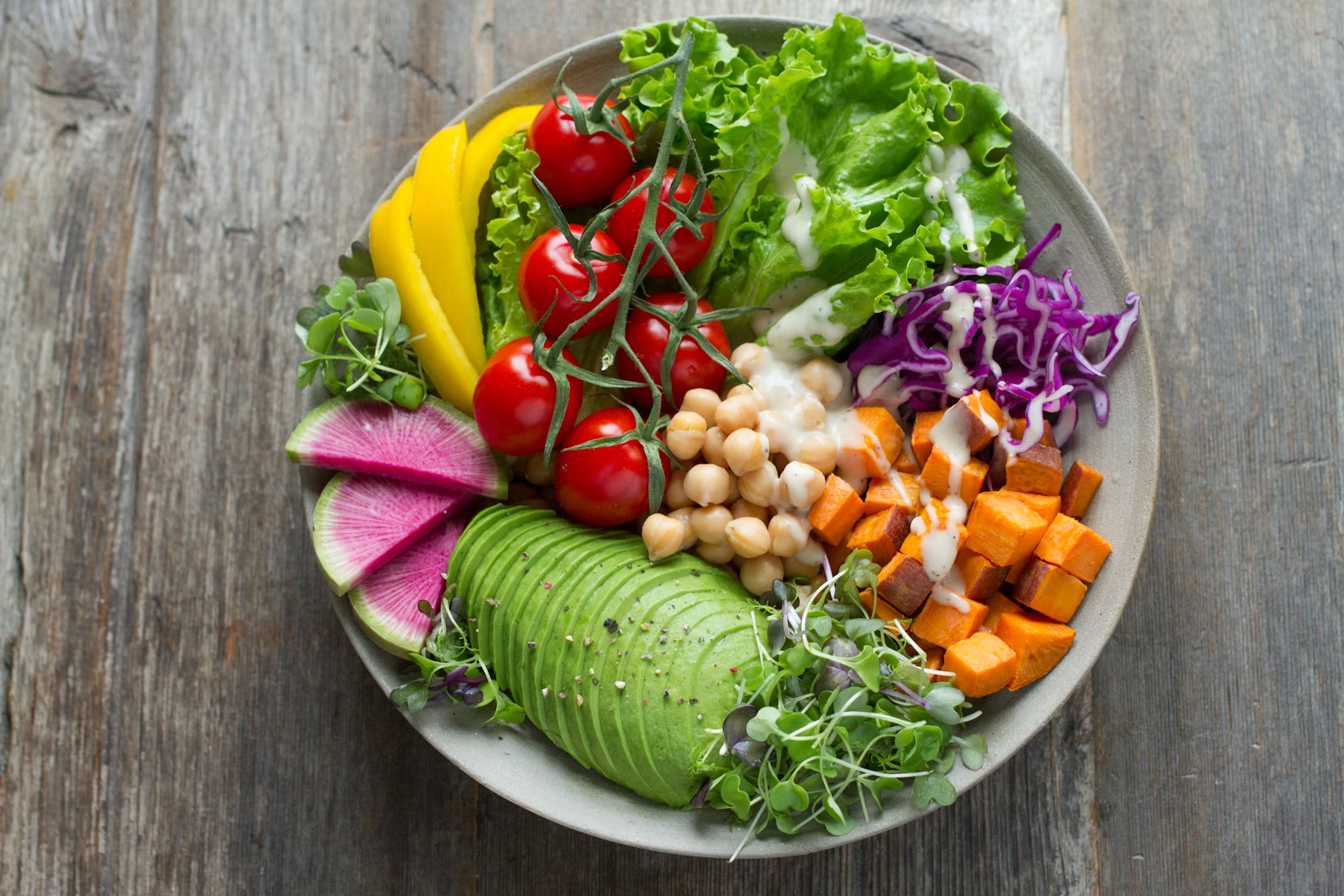
There is also a subtler hormetic connection worth naming: eating polyphenols is itself a form of mild hormesis. The compounds that give plants their deep colours — the blues in blueberries, the reds in grapes and pomegranates, the deep greens in leafy vegetables, the yellows of turmeric — are not there to please us. They are defence compounds produced by plants in response to stress: UV radiation, pest attack, drought, microbial pressure. When humans eat them, these compounds act as low-dose stressors on our own cells, triggering adaptive responses through the same stress-resistance pathways (Nrf2, sirtuins, AMPK) that are activated by exercise and fasting. The phenomenon has a name in the scientific literature — xenohormesis — and it is part of why plant-rich diets do more than the vitamin and mineral content alone would predict.
Eating is social behaviour for most of human history, and the places where people reliably live longest — the Blue Zones — are without exception places where food is shared, not consumed alone in front of a screen. Social connection affects nutrition through practical channels (shared meals are slower, more varied, and less likely to feature ultra-processed food), through psychological channels (loneliness drives stress-eating and disrupts appetite regulation), and through behavioural channels (people adopt the eating patterns of those around them).
Chronic stress reliably degrades nutrition outcomes. Cortisol elevation increases cravings for refined carbohydrates and sugar, disrupts sleep (which in turn disrupts eating), and drives the mindless snacking that section 3’s first portrait quietly depended on. Meditation and related practices lower baseline stress reactivity, which narrows the gap between what someone knows they should eat and what they actually eat under pressure. The connection is less about meditation producing better food choices directly, and more about meditation making the environment in which food choices happen less chaotic.
Longevity Pathways — biomarker tracking, continuous glucose monitoring, advanced blood work, biological age testing, emerging drug classes — is the pillar where longevity science becomes most personalised and most data-driven. The connection to nutrition is straightforward: these tools measure whether a nutrition pattern is actually working for the individual member. Two people can eat identical diets and see different lipid panels, different glucose responses, different inflammatory markers. CGM data reveals which specific meals cause glucose volatility for a given person; blood work reveals whether a good-looking diet is actually producing the intended biomarker improvements. The Nutrition pillar delivers the pattern; the Longevity Pathways pillar delivers the feedback loop that tells you whether the pattern is doing its job.
Nutrition is necessary but not sufficient. A member who nails the nutrition pillar and ignores the other nine will still age better than most of their peers — the evidence from sections 1 and 2 makes that clear. But the compounding effects Forever Well is designed around come from the system, not from any single pillar. Sleep, movement, connection, and stress regulation each multiply the effects of good nutrition; poor versions of any of them dampen those effects.