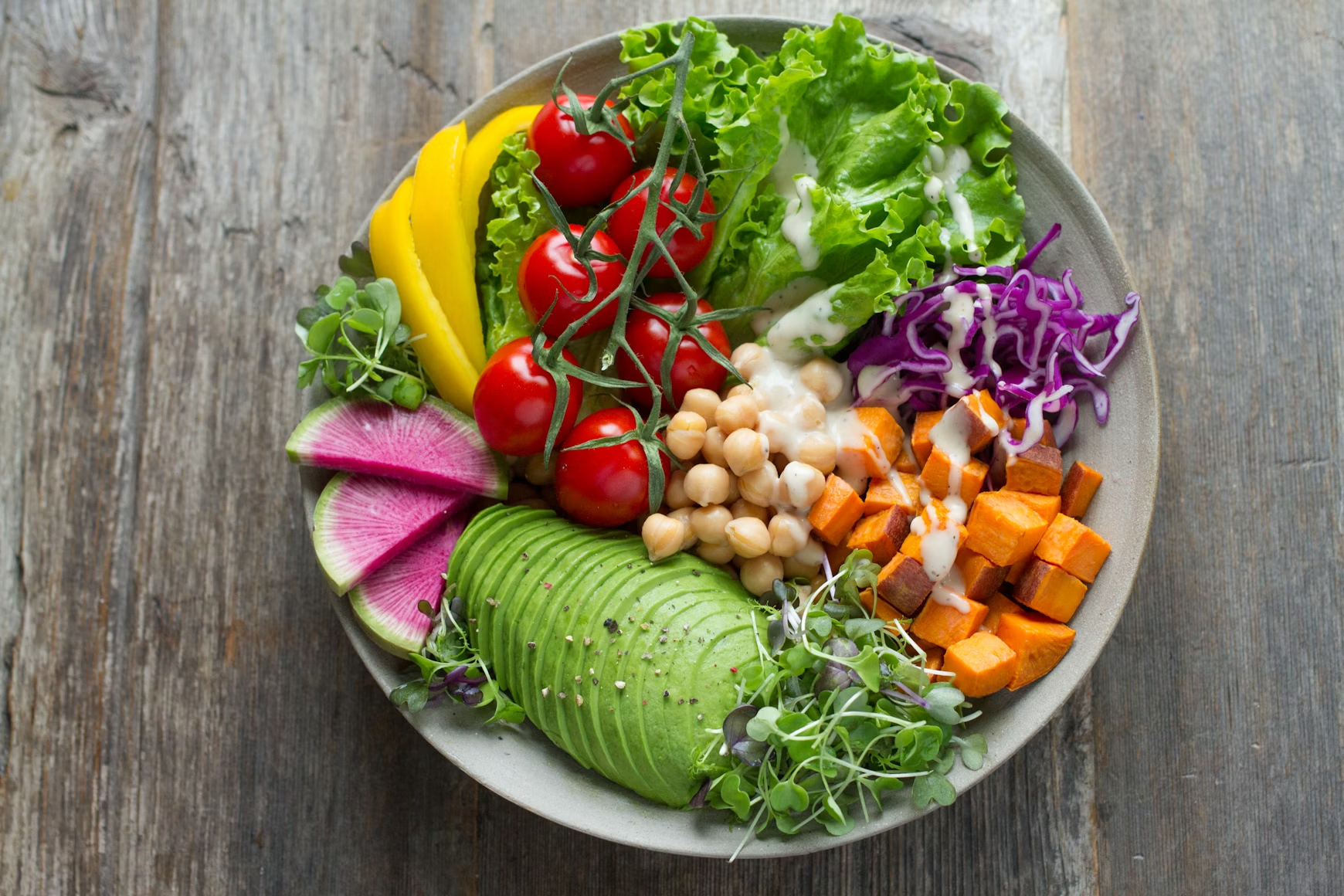
What follows is three tiers of practical guidance — not a ladder, just a way to orient where you already are. Each tier has three actions. That’s deliberate: more would be overwhelming, fewer would be too general. If your current pattern looks a lot like the first portrait in section 3, start at the top. If you’re already doing most of the Start here actions by default, jump to Build on it. If you’re working on the high-value moves that take a good pattern to an exceptional one, head to Optimise.
The brief is not a plan. It’s a set of moves, ranked roughly by leverage — the big-impact ones first, the marginal gains last. Pick one, implement it until it’s automatic, then come back for the next. Members who try to implement nine things at once usually implement none. Members who implement one thing this month and another next month compound quickly.
The three actions in this tier are the biggest levers for someone whose current pattern is quietly undermining their long-term health without them noticing. They’re not small changes, but none of them require meal-planning apps, specialist ingredients, or buying anything from a wellness brand.
For most UK adults, breakfast is the meal that most needs rebuilding — not because of one specific nutrient, but because the default British breakfast (toast, cereal, a banana, nothing at all) delivers very little of what the morning should be giving the body. The shift that matters is to make breakfast broadly savoury, with real protein and real fibre in it. Sweet, carbohydrate-heavy breakfasts drive the blood sugar spike-and-crash that fuels the mid-morning biscuit run. Savoury breakfasts with protein and fibre produce steady energy through to lunch and lay down the muscle maintenance signal discussed in section 2.
The broad aim: roughly 25 to 30 grams of protein and at least 8 to 10 grams of fibre at the first meal of the day. Not a target to hit exactly, just a rough sense of what a good breakfast looks like. If you’re over forty and your breakfast doesn’t include eggs, yoghurt, fish, cottage cheese, beans, or a deliberate protein source, it’s probably not pulling its weight.
Easy savoury formats: two or three eggs with spinach, tomato and avocado. Greek yoghurt with berries, nuts and seeds. Cottage cheese on sourdough with tomato and black pepper. Smoked salmon and scrambled eggs at weekends. A hearty bean and vegetable soup left over from dinner. Leftover roasted vegetables with a fried egg on top. None of these take longer than toast.
The diversity smoothie. If you’re rushed, the breakfast smoothie is a way to deliver unusual levels of protein, fibre and plant diversity in about three minutes. The format we recommend: 200g of live Greek yoghurt or kefir, 25g of Daily Diversity (Forever Well’s plant blend), a handful of mixed frozen berries, and 150ml of milk or plant milk. Blend. One serving delivers roughly 25 grams of protein, 9 to 10 grams of fibre, and meaningful portions of the daily targets for iron, magnesium, zinc, potassium and vitamin C.
The goal isn’t to eliminate UPFs completely — that’s neither realistic. The goal is to bring your UPF share from around 60 per cent of calories (the UK average) down to something closer to 25 per cent, but the lower the better. The biggest wins come from identifying the two or three UPFs that are doing the most quiet damage in your week, and replacing them with less processed alternatives.
For most households, the usual suspects are: sugary breakfast cereals (replace with porridge or Greek yoghurt), the sliced bread from the centre aisle (swap for a sourdough or seeded loaf), the jar pasta sauce (tinned tomatoes, garlic, olive oil and herbs take four extra minutes), the supermarket ready meal (batch-cook one or two dishes at weekends and freeze portions), flavoured yoghurts heavy with added sugar (plain yoghurt plus fruit), and the snacks kept in the drawer for afternoon energy dips (nuts, fruit, a square of dark chocolate).
Most UK adults eat fruit and vegetables in two or three visible moments across the day. The shift that matters is making plants a default component of every meal, including breakfast. Over a week, this roughly doubles plant intake without requiring anyone to become more adventurous or spend more time cooking. Don’t worry about variety yet (that comes in the next tier). At this stage, the aim is simply that no meal passes without plants in it. Frozen vegetables count, tinned beans count, fruit eaten out of a bowl counts. Perfect is the enemy of habitual.
This tier assumes the three Start here actions are mostly in place — you’ve got a protein-forward breakfast most mornings, UPFs are a modest fraction of your week, and plants show up at every meal. The three actions here sharpen the pattern by increasing variety, improving distribution, and adding a specific category of food that research has shown to do work the others don’t.
The 30-plants-a-week guideline came out of the American Gut Project — one of the largest microbiome studies ever conducted — which found that people eating 30 or more different plant species per week had measurably more diverse gut microbiomes than those eating 10 or fewer. Diversity of the microbiome correlates with almost every long-term health outcome that has been studied. The specific number matters less than the principle: eat across a wide spectrum of plants, not just more of the same three or four.
The research suggests roughly 25 to 30 grams of high-quality protein per meal is the threshold at which muscle protein synthesis fires fully. Most people hit this at dinner and miss it at breakfast and lunch. Rebalancing to hit the threshold three times a day is a meaningfully larger signal for muscle maintenance than hitting it once and falling short twice.
The 2021 Stanford trial found that fermented foods produced measurable microbiome diversity and reductions in inflammatory markers in ways that an increase in fibre alone did not. The practical target: at least one serving of fermented food every day, ideally three — one at each meal. A practical three-a-day format: kefir in the morning smoothie, a forkful of sauerkraut or kimchi alongside lunch, miso in a dressing or a piece of aged cheese alongside dinner.
This tier is for people whose pattern is already solid — Start here is automatic, Build on it is mostly in place, and the fridge and cupboard are set up for good defaults. The three actions here are the high-value moves that separate a good pattern from an exceptional one.
The research on glucose variability suggests that the order in which you eat the components of a meal affects the post-meal blood sugar response — sometimes substantially. Eating protein and vegetables before the carbohydrates on the plate can reduce the post-meal glucose spike by 30 per cent or more, with the same foods and the same total calories. Practical applications: when you have a rice or pasta-based meal, eat some of the protein and vegetables first before getting to the starch. Put the salad at the start of a restaurant meal rather than the end. Add a small amount of acid to carbohydrate-heavy meals — vinegar in a dressing, lemon juice, a splash of balsamic.
At the Optimise tier, plant variety gets more deliberate. Different plants contain different polyphenol profiles — the compounds in blueberries aren’t the same as those in walnuts, which aren’t the same as those in turmeric. Eating the same ten plants in large quantities delivers less of the total bioactive landscape than eating thirty different ones in smaller amounts. Aim to include something from each colour band — red, orange, yellow, green, blue/purple, white/tan — and several categories each week.
Beans and other legumes — including lentils, chickpeas, peas and broad beans — are one of the strongest-evidenced and most under-used foods in modern UK diets. They are the only food category that appears in every identified Blue Zone, and the only staple shared across the Mediterranean, Okinawan, and Adventist longevity patterns. A systematic review of 32 cohort studies covering 1.1 million participants found that higher legume intake was associated with a 6 per cent reduction in all-cause mortality for every additional 50g per day consumed. The practical target: at least one serving of beans or other legumes every day, ideally three different types across the week.
Nine actions across three tiers. Pick one from wherever you are and implement it until it’s automatic. Come back for the next one. The members who benefit most from Forever Well over a decade are not the ones who overhaul everything in a month. They’re the ones who compound small, permanent shifts over time. Nutrition is one of the slowest-feedback systems in health — the effects of a good week or a bad week barely register, but the effects of a good decade versus a bad one are enormous.